Anzac Day remembrance
Echoes of Gallipoli - when faith, memory and voice endure
ACU Library is privileged to hold a small number of rare prayer books distributed to soldiers during the First World War. Carried into training and active service, these modest volumes offered comfort, reflection and guidance during times of uncertainty.
This exhibit focuses on one prayer book, The Red Cross prayer book, with 15 prayers covering all contingencies soldiers would have encountered. One of the prayers 'For a soldier' has been recorded using AI text-to-speech technology to create an immersive online experience.
The exhibit also looks at an article 'A voice from Gallipoli: The soldier speaks', published in The Children’s Newspaper, (Number 678, 19 March 1932), in which General Sir Granville de Laune Ryrie reflects on the huge price paid and loss of life at the World Disarmament Conference, held in Geneva. Excerpts of his speech have been generated by AI speech technology which can incorporate emotion into the reading.
Presented for Anzac Day, this small exhibit honours remembrance through preserved words and enduring voices.
Anzac Day remembrance
The Red Cross prayer book
Small, portable prayer books and Bibles were frequently carried by World War I soldiers, often supplied by organisations like the Red Cross or through chaplaincy services. These personal religious materials included The Soldier's Bible or pocket-sized Books of Common Prayer, often featuring special prayers for safety, protection, and comfort during the war.
These books were deemed essential for morale and spiritual care in the trenches, representing a connection to home and faith. The Red Cross was seen as a guardian on the home front, often distributing comforts and materials. The imagery and publications focused on providing comfort to the wounded, which often included religious support.
Other websites to explore:
- The Australian War Memorial and similar organizations hold examples of these deeply personal, often worn, religious materials.
- An interesting article about the Red Cross in WWI which references nurses and women involved in the war.
- The British Library holds one of the only few copies of The Red Cross Prayer Book available (unfortunately is not digitised).
The video on the right scrolls slowly through the seven pages of the prayer book. Click pause and enlarge any page to read through.
Contents of The Red Cross prayer book:
- Morning prayer
- Evening prayer
- For pardon
- For those at home
- For our comrades in arms
- For non-combatants
- For a soldier
- For a communicant
- For a sick man who cannot pray
- Prayer for a sick man
- Thanks for preservation
- On behalf of a dying man
- On behalf of one passing away
- For comrades who have died
- Act of faith
The reading of 'For a soldier'
The prayer 'For a soldier' is being read by AI generated text to speech technology in this video. To create as much of an immersive experience, as possible online, recorded background sounds of wind, rifle and machine gun fire have been incorporated into the audio.
Interviews of Anzacs and newspaper articles mention the sounds of war at Gallipoli, including the loud wind ripping through the trenches along with the firing of rifles and machine guns.
“…Gallipoli was a noisy place. The sounds of artillery rifle and machine-gun fire, the occasional reconnaissance aircraft overhead and 1000s of men moving about echoed through the gullies and ridge lines…” from the Australian Department of Veteran's Affairs.
Listen to the ABC’s James Glenday reporting on the Australian War Memorial gallery’s’ new accurate soundtrack of World War 1, which were created from a series of firsthand accounts and research.
Further information on the weapons used in Gallipoli:
- Australia War Memorial blog post discussing the issued rifles and bayonets of the First World War.
- Australian Department of Veterans' Affairs webpage about Weapons used by the Australian Army in World War I, DVA Anzac Portal.
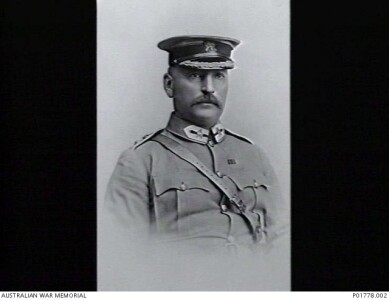
Major General Granville de Laune Ryrie
On 18 February 1932, Major General Granville de Laune Ryrie gave an emotionally charged speech at the Disarmament Conference held in Geneva. His speech was reported in newspapers around the world and in The Children's Newspaper, (Number 678, Page 4), which is held by ACU Library.
Parts of his speech were quoted in newspaper reports and have been used by AI text-to-speech technology to create a recording. Listen to the AI generated recording while watching a short video from the Australian War Memorial Commander Leighton Bracegirdle: Australian at Gallipoli. The video was shortened to match the length of the recording.
Another newspaper article, covering Ryrie's speech, "Why did we kill each other?", appeared in The Australian Worker, Sydney, NSW on Wednesday 4 May 1932 and is available from The National Library of Australia. To read more about major General Ryrie's life see the entry in the Australian Dictionary of Biography
Credits:
- Studio portrait of Major General Granville de Laune Ryrie, Australian War Memorial P01778.002
- Video adapted from Commander Leighton Bracegirdle: Australian at Gallipoli by the Australian Department of Veterans Affairs, made available under a CC BY 4.0 licence
ACU Library's acquisition of The Red Cross prayer book
The Red Cross Prayer book is part of ACU's Missionary Collection (part of The Nolan Historical Children's Literature Collection). The collection continues to grow from the generious donations of John and Grace Nolan.
The Nolans advised they found the prayer book inside another book, “used, we presume, as a bookmark”. They are fairly sure the book was found in Explorers of the Dawn by Mazo De La Roche (Nolan; NOL 810.52 DEL).
Perhaps more interestingly, is the inscription inside this book with the name and address: John Brennan, 101 Wellington St, Kew. The book is published in 1923 - after the end of the war.
War records show a few people named John Brennan enlisted from Melbourne in WWI. Some died while serving, one returned. It is possible this belonged to one of the following soldiers:
John Brennan: Service number 375, returned
Private John (Jack) Brennan: Service No. 549/V80102. Born in Melbourne (1890), enlisted in 1914 at Eastern Hill, Vic. Hometown identified as Fitzroy, returned
Private John Brennan: Service No. 1520. 48th Battalion, killed in action in France on May 3, 1918 age 32
In 2025, ACU Library launched the Missionary Collection. In attendance was Major General (Ret'd), Michael O'Brien, CSC, MDA, BSc (Mil), who runs an antiquarian book business and has been involved with the archive and museum at the Victoria Barracks and the Military History & Heritage Victoria.
He advised that the prayer book is very rare, "...to my recollection", he said, "... there isn't one at Victoria Barracks archive nor the War Memorial in Canberra, ... Not sure about the Shrine here in Victoria. Often the records are scant on details and trickier to find."